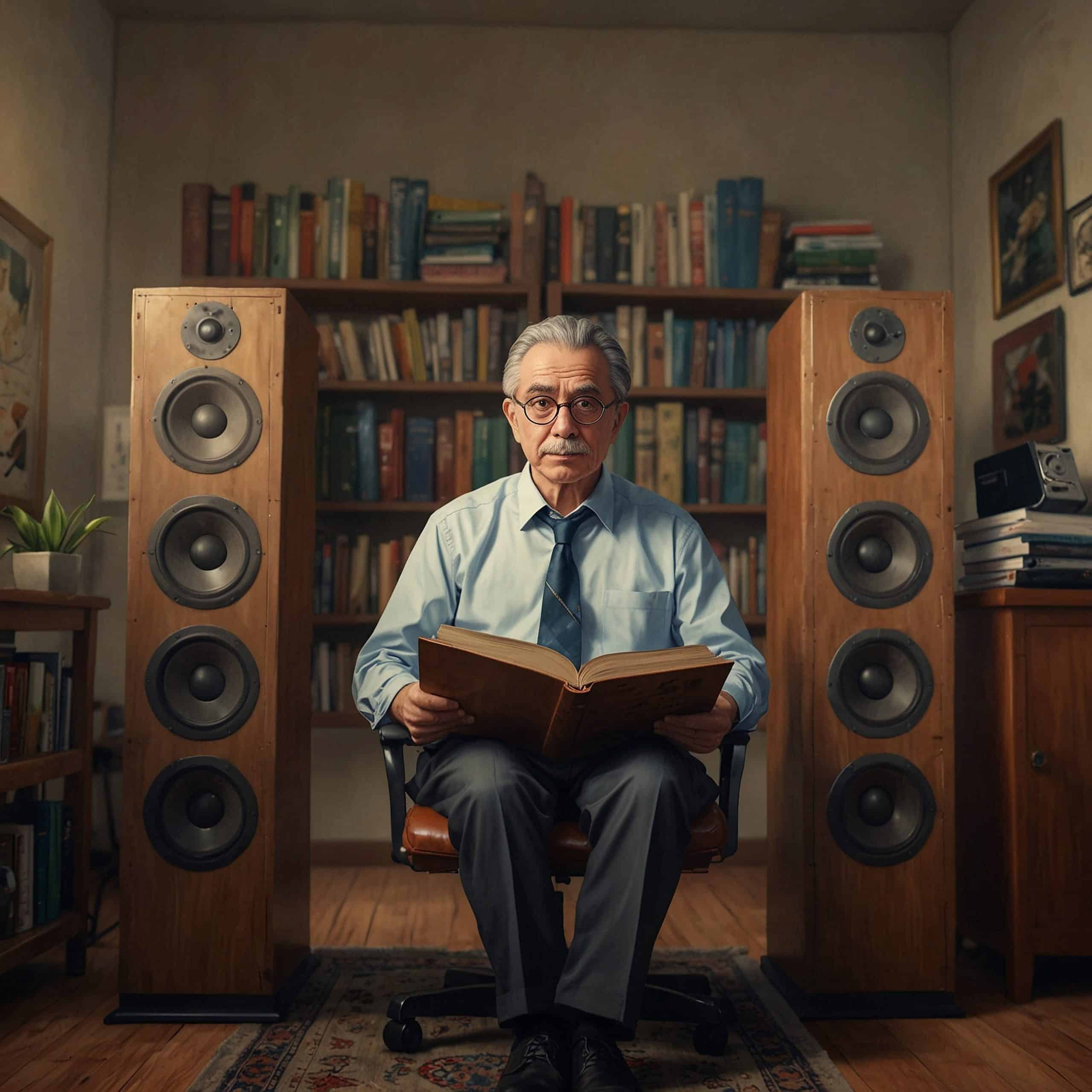
Decoding High Fidelity: Essential Guide for Audiophiles
For those who truly love music, hearing it merely isn't enough; experiencing it in its purest, most authentic form is the ultimate quest. This pursuit leads us into the fascinating world of high fidelity audio systems, a realm where sound quality is paramount and every note, nuance, and emotion is reproduced with stunning accuracy. High fidelity, often shortened to hi-fi, represents the pinnacle of sound reproduction, aiming to transport the listener into the recording space, making them feel as if the artist is performing live right before them.
But what exactly defines "high fidelity," and why does it matter so much to audiophiles and home audio enthusiasts? It's more than just loud sound; it's about faithfulness to the original recording, a meticulous standard that distinguishes premium audio from its lesser counterparts. Let's embark on a journey to understand, appreciate, and even build your own high fidelity sanctuary.
What Truly Defines High Fidelity Sound?
At its core, high fidelity is about delivering sound that is virtually indistinguishable from the live performance or the original master recording. This isn't an easy feat, as it requires a delicate balance of engineering prowess and an uncompromising commitment to audio purity. The key characteristics that define a true high fidelity experience include:
- Inaudible Noise: A hallmark of quality audio, hi-fi equipment should reproduce sound without any discernible background hiss, hum, or static. The silence between notes is just as important as the notes themselves.
- Minimal Distortion: Distortion refers to unwanted changes in the sound's waveform as it passes through the audio chain. In a hi-fi system, distortion is kept to an absolute minimum, ensuring that the sound remains clean, clear, and uncolored, preserving the artist's original intent.
- Flat Frequency Response: This is a crucial technical specification. A flat frequency response means that all audible frequencies—from the deepest bass (around 20 Hz) to the highest treble (around 20 kHz)—are reproduced at the same relative volume level. There are no exaggerated highs or lows unless they were present in the original recording. This neutrality ensures that the sound isn't "colored" or biased towards certain frequencies, offering an honest representation of the audio source.
- Wide Dynamic Range: High fidelity systems excel at reproducing the full spectrum of sound intensity, from the softest whispers to the loudest crescendos, without compression or loss of detail. This ability to handle both extremes adds immense realism and emotional impact to the music.
These qualities stand in stark contrast to the lower-quality, or lo-fi, sound typically associated with inexpensive audio equipment, older recording technologies, or compromised digital formats. The difference is not just audible; it's profoundly experiential.
A Brief History of Sound Perfection: The Dawn of High Fidelity
The pursuit of high fidelity isn't a modern phenomenon; it's a journey rooted in early 20th-century innovation. Bell Laboratories played a pioneering role in the early 1930s, experimenting with advanced recording techniques. Legendary performances by Leopold Stokowski and the Philadelphia Orchestra were captured using novel methods, even employing telephone lines for transmission, showcasing an early desire to overcome technical limitations. Early advances in optical sound film, used by MGM and Twentieth Century Fox, also contributed to improving recording quality.
Visionaries like Avery Fisher, an amateur violinist and audio enthusiast, dreamed of creating home audio equipment that could replicate the experience of a live orchestra. Simultaneously, Harry F. Olson's experiments in the post-WWII era scientifically proved that listeners overwhelmingly preferred high-fidelity reproduction once the noise and distortion inherent in early sound equipment were removed.
However, the real revolution for the home audio enthusiast began around 1948, ushering in an era of unprecedented improvements in sound quality:
- Reel-to-Reel Audio Tape Recording: Building on German technology, this innovation significantly improved recording fidelity, allowing artists like Bing Crosby to produce and distribute higher-quality recordings.
- The 33⅓ rpm Long Play (LP) Microgroove Vinyl Record: LPs brought dramatically lower surface noise, extended playtimes (crucial for classical music fans), and standardized equalization curves. This meant more music on a single disc and a far superior listening experience compared to older 78-rpm records.
- Higher Quality Turntables and Responsive Needles: Advancements in turntable design and more sensitive stylus technology allowed for precise tracking of the LP's delicate grooves, extracting more detail and reducing wear.
- FM Radio: Offering wider audio bandwidth and greater resistance to signal interference and fading than AM radio, FM became a vital source for high-quality broadcast music.
- Better Amplifier Designs: Engineers began paying closer attention to frequency response and distortion characteristics, leading to more powerful, cleaner, and more accurate amplification for home systems.
These innovations laid the groundwork for the evolution of Hi-Fi, transforming home listening from a mere convenience into a passionate pursuit of sonic excellence.
The Core Components of High Fidelity Audio Systems
A true high fidelity audio system is a carefully curated chain of components, each playing a critical role in preserving the integrity of the sound. Understanding these components is key to building an exceptional listening experience:
- The Source: This is where the music originates. It could be a high-resolution digital audio file played through a streamer, a meticulously pressed vinyl record spinning on a turntable, a CD player, or even a reel-to-reel tape deck. The quality of the source material and its playback device is fundamental – "garbage in, garbage out" holds true here.
- The DAC (Digital-to-Analog Converter): For any digital source (streamer, CD player, computer), a DAC is essential. It translates the digital data into an analog electrical signal that your amplifier can understand. High-quality DACs are crucial for preserving detail and dynamic range in the digital domain.
- The Amplifier (Preamplifier & Power Amplifier):
- Preamplifier: This component takes the low-level signal from your source, allows you to select inputs, adjust volume, and sometimes apply tone controls, preparing it for the power amplifier.
- Power Amplifier: This is the muscle of the system, taking the refined signal from the preamplifier and boosting its power sufficiently to drive your speakers. Some systems use an integrated amplifier, which combines both preamplifier and power amplifier into a single chassis for simplicity and synergy.
- Transducers (Speakers & Headphones): These are the components that convert the electrical signal into audible sound waves.
- Hi-Fi Speakers: Often considered the most defining element of a system, speakers are responsible for moving air to create sound. Quality speakers are designed to reproduce sound with accuracy, wide frequency response, and minimal distortion, creating a realistic soundstage and imaging. From compact bookshelf speakers to imposing floorstanders, and exotic electrostatic or planar magnetic designs, the choice of speakers profoundly shapes the listening experience.
- High-End Headphones: For personal, immersive listening, high-fidelity headphones offer an incredibly detailed and intimate soundstage, often revealing nuances that might be masked in a room environment.
- Cables & Interconnects: While sometimes debated, quality interconnects (connecting components) and speaker cables are designed to minimize signal loss and interference, ensuring the pure audio signal reaches its destination unimpeded. Power conditioners can also help clean up electrical supply.
- Room Acoustics: Often overlooked, the listening environment itself plays a crucial role. Room size, shape, furnishings, and materials all interact with sound waves, affecting bass response, imaging, and overall tonal balance. Proper room treatment can dramatically improve a system's performance.
Building Your High Fidelity Sanctuary: Tips for Aspiring Audiophiles
Embarking on the journey of building a high fidelity audio system can be incredibly rewarding. Here are some practical tips to guide you:
- Start with the Source: The adage "garbage in, garbage out" is paramount. Invest in high-quality source material (high-res files, well-mastered vinyl) and a capable source component first. A great source will always sound better than a poor one, regardless of your amplifier or speakers.
- Prioritize Speakers (and Room Acoustics): Speakers are the voice of your system. They have the most profound impact on the sound you hear. Allocate a significant portion of your budget here. Once you have good speakers, consider your room's acoustics. Simple additions like rugs, curtains, or even careful furniture placement can make a big difference, and more advanced acoustic panels can further refine the sound.
- Match Components for Synergy: Don't just buy the most expensive component in each category. Research and understand how different brands and types of equipment work together. An underpowered amplifier won't do justice to demanding speakers, for example. Look for components that complement each other's strengths.
- Listen Before You Buy: Your ears are the ultimate judge. Visit audio stores or hi-fi shows and listen to different systems with music you know intimately. Personal preference in sound signature (warm, neutral, analytical) is highly subjective.
- Consider Your Budget and Upgrade Path: High fidelity can be an expensive hobby, but it doesn't have to be. Start with a solid foundation and upgrade components incrementally over time. Even entry-level hi-fi can offer a significantly improved experience over mass-market audio.
- Placement Matters: Speaker placement in your room is critical for achieving optimal soundstage, imaging, and bass response. Experiment with distance from walls, toe-in (angle towards the listener), and the listener's position.
- Maintenance is Key: Keep your equipment clean. For vinyl enthusiasts, invest in good record cleaning solutions and regularly check your stylus for wear. Clean connections on cables can also prevent signal degradation.
The pursuit of high fidelity is an ongoing adventure, a continuous discovery of new musical details and emotional depth. It's about respecting the art of music and allowing it to be presented in its truest form. By understanding the principles and components of high fidelity audio systems, audiophiles can create a personal sanctuary where music transcends mere sound and becomes an immersive, soul-stirring experience.